
After Dark
First Light to Last Call: The Ship's Evening Overture
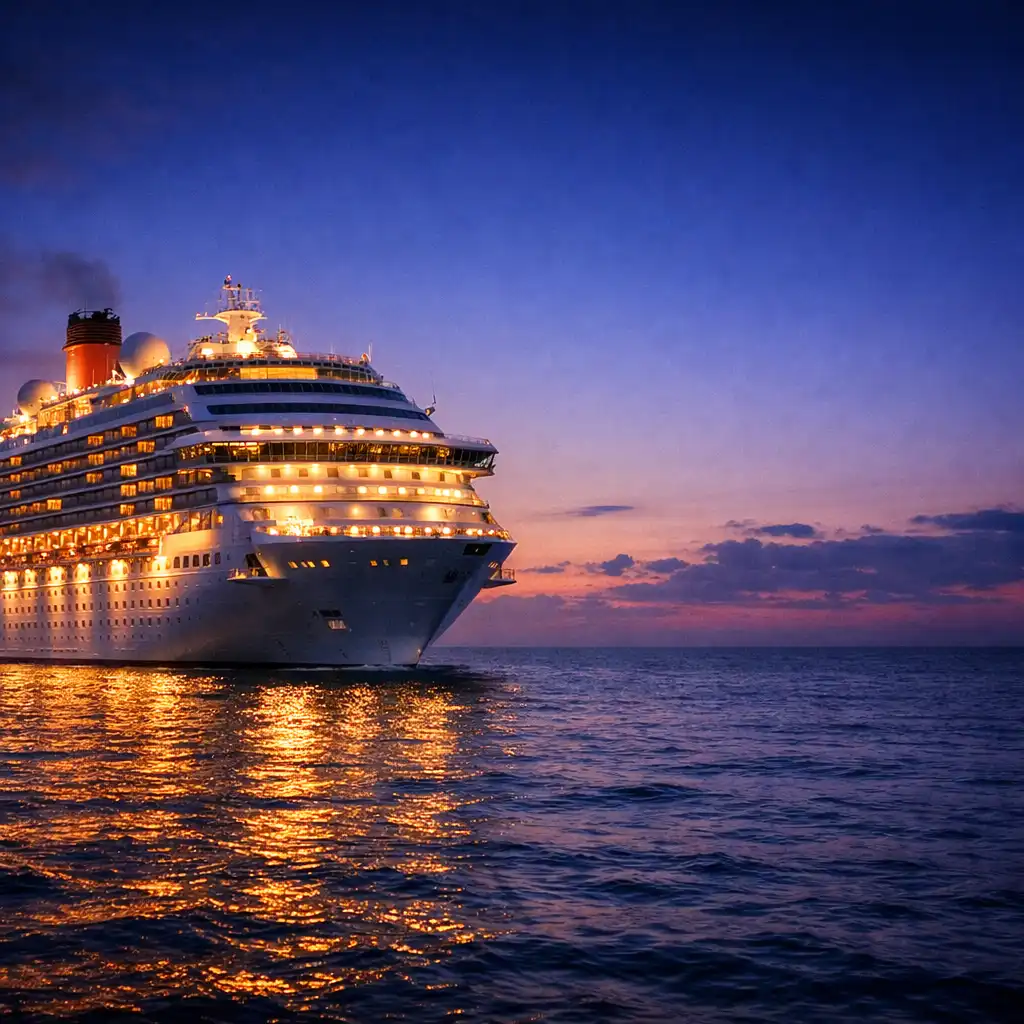
As the sun drops below the horizon, the ship's public decks undergo a quiet metamorphosis. The last sunbathers retreat, deck crews begin their evening rounds, and the first notes of live music drift from the atrium. Warm lanterns replace the glare of midday, while cool LED accents trace the railings and stairways. Passengers trade swimwear for evening wear, and the foot traffic gradually turns toward dining rooms and bars. It is the hour when the vessel begins to reveal its second personality.
The Ship's Two Personalities
By day, the vessel is a floating resort of pools and sun decks; by night, it becomes a glittering entertainment complex. The same spaces take on new identities—a quiet lounge becomes a jazz bar, an observation deck becomes a stargazing spot. The pool deck transforms into an outdoor cinema, the buffet into a themed bistro, and the atrium into a ballroom. Lighting design is the quiet architect of this change, using pools of warm light to draw passengers toward evening venues while leaving the outer decks in a soft, blue-tinted darkness.
The ship's architecture channels passengers through a sequence of moods. From the bright, social promenade to the hushed observation lounge, each space is tuned to a different register of the night. The result is not a single evening, but a constellation of possible evenings—each passenger assembling their own route through the ship's after-dark geography.
“The ship does not sleep at sunset. It changes its clothes, dims its lights, and begins to speak in a different voice.”
The Evening Deck
Where the Ship Breathes
The Pool Deck After Hours
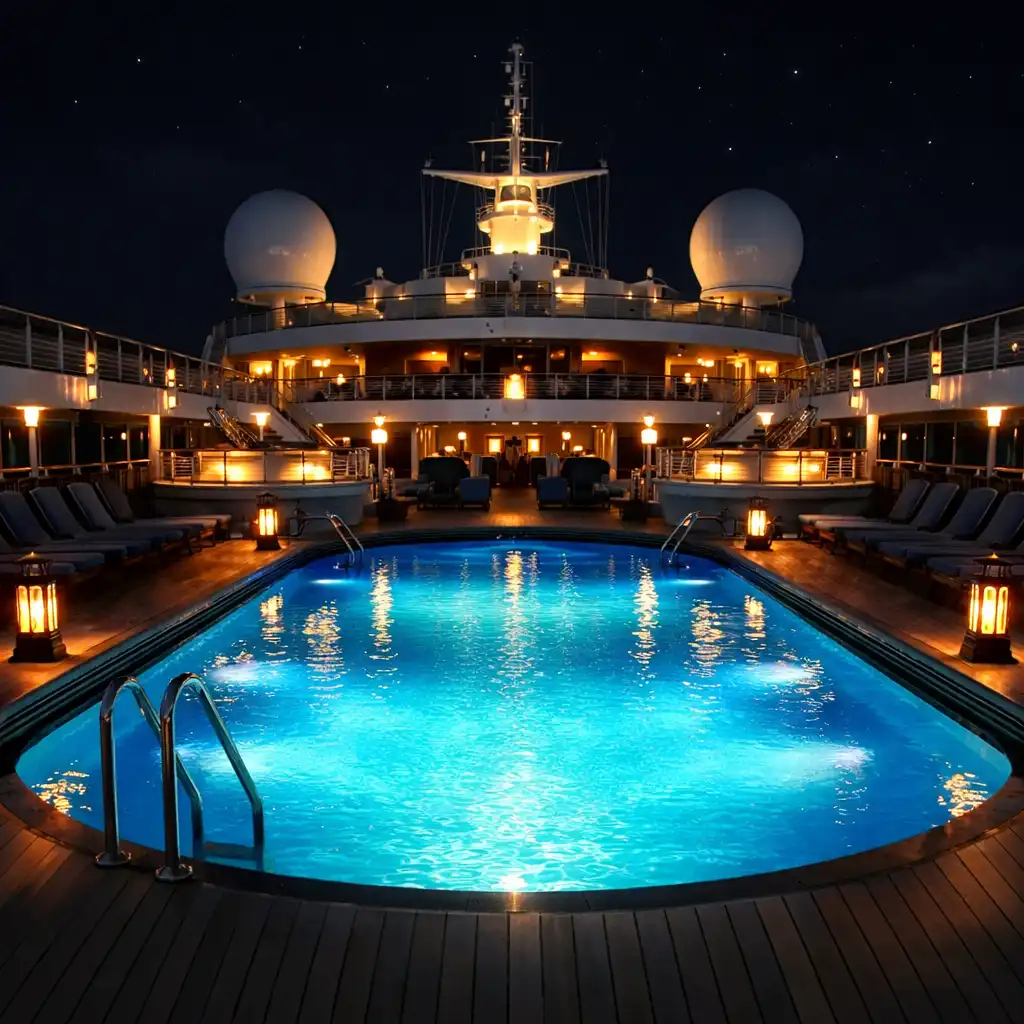
The pool deck, once a riot of splashing and sunbathing, settles into a serene amphitheater. The water glows with underwater lights, and the surrounding loungers are rearranged for evening events or simply left empty under the stars. The contrast between daytime noise and nighttime quiet is almost startling. On some ships, the pool becomes an outdoor cinema, with deck chairs turned toward a screen and the water reflecting the flicker of the film. On others, it remains a still, luminous rectangle—a mirror for the ship's lights and the moon.
The Promenade: A Stage for Strolling
The promenade deck becomes a social artery after dark. Passengers walk arm in arm, pausing at railings to watch the ship's wake glow with bioluminescence. The air is cooler, carrying the scent of salt and the distant sound of music from open doors. Interior light spills onto the deck in long, warm rectangles, and the rhythm of foot traffic and conversation creates a gentle, continuous murmur. There is a sense of being suspended between sea and sky, with the dark water stretching to the horizon on one side and the bright, humming ship on the other.
“The promenade after dark is the ship's most honest place—a long, open sentence between the noise of the lounges and the silence of the sea.”
Observation Lounges: The Ship's Quiet Corners
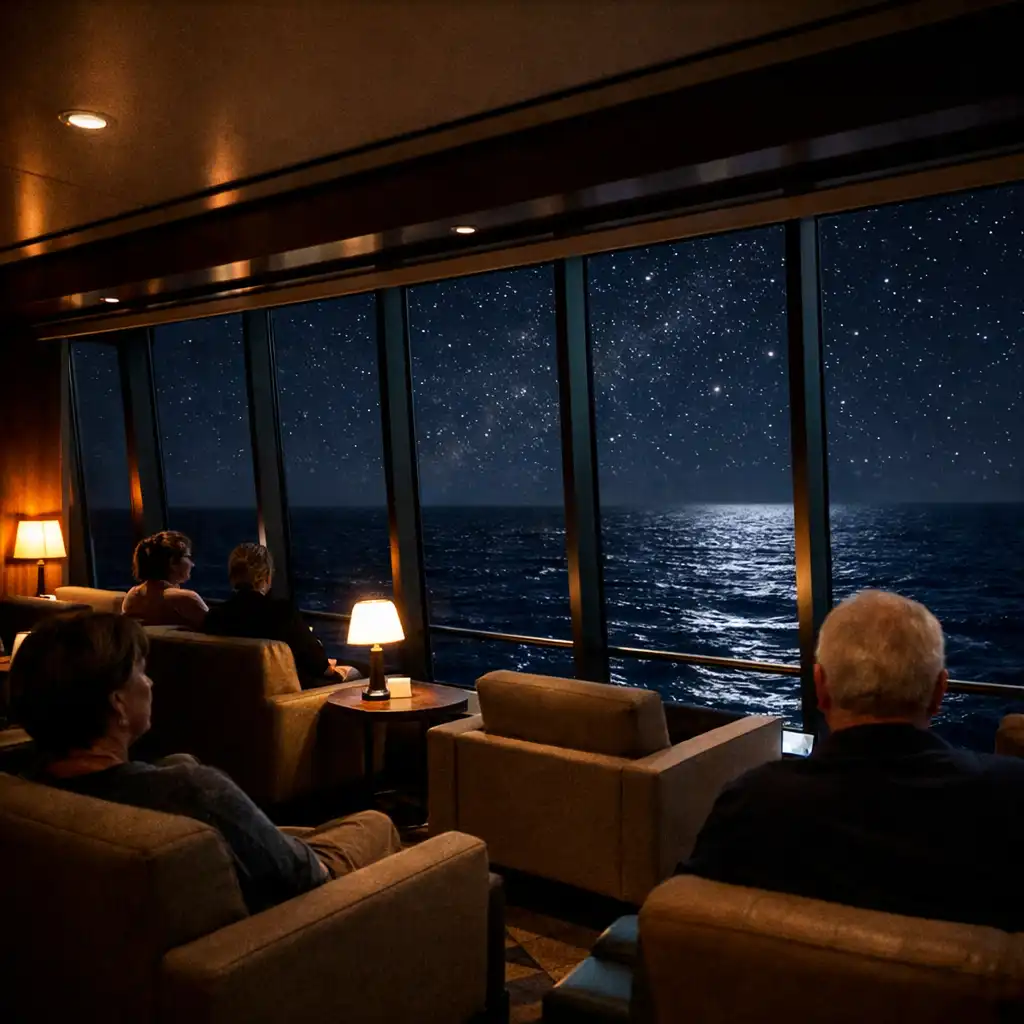
High above the waterline, observation lounges offer a different kind of evening. Here, the focus is on the horizon and the stars, with low lighting and comfortable seating encouraging quiet conversation or solitary reflection. Panoramic windows frame the dark ocean, and the muted colors and soft furnishings absorb the sound, creating a pocket of calm. For passengers seeking a break from the crowds, these lounges are a refuge—a place to watch the night move past the glass while the rest of the ship carries on below.
The Theatre
A Night at the Show
The Main Stage
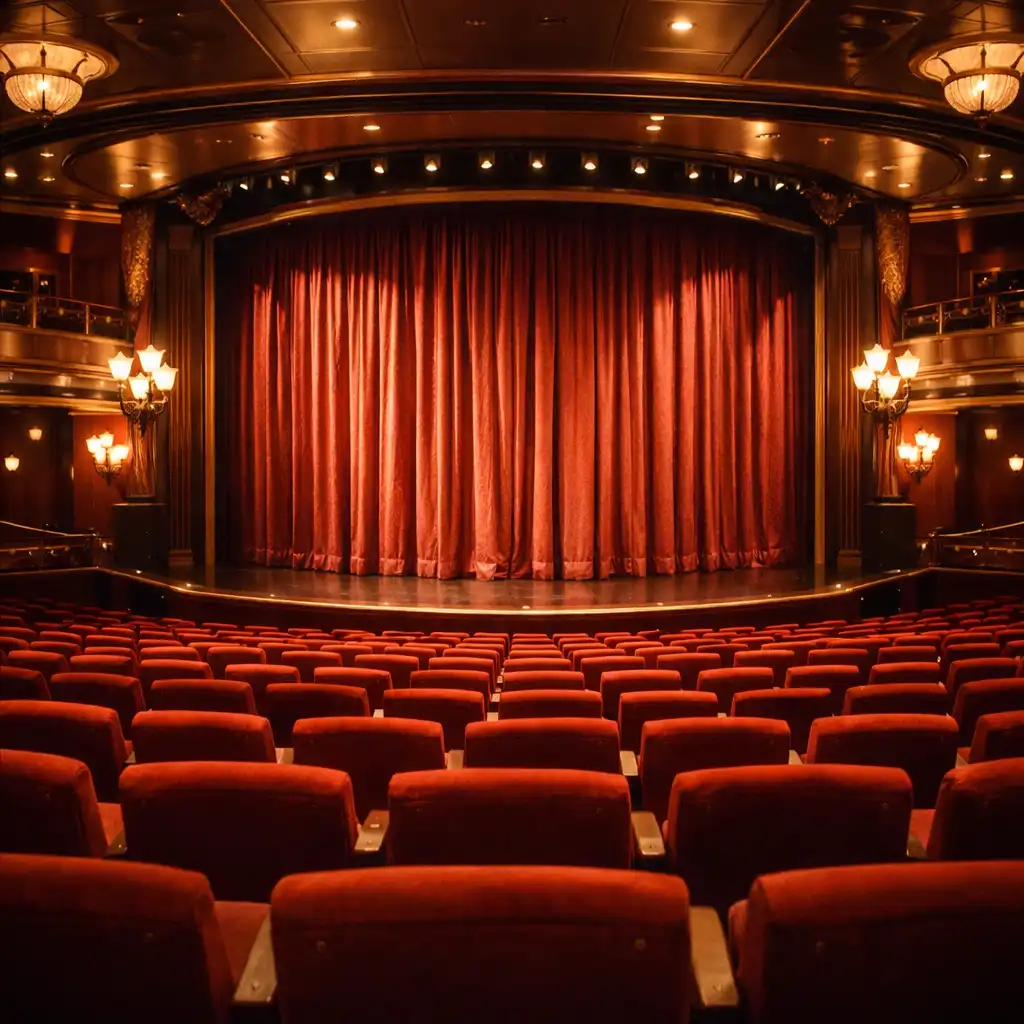
The ship's theatre is a marvel of compact design, packing a full stage, orchestra pit, and seating for hundreds into a space that feels both grand and intimate. The productions range from Broadway-style musicals to acrobatic spectacles, supported by sophisticated lighting, sound, and stage machinery. Attending a show becomes part of the evening ritual—a shared experience that anchors the night before passengers disperse to bars, lounges, and the casino.
The Late-Night Comedy Club
After the main show, the comedy club offers a more irreverent take on shipboard life. The room is smaller, the jokes are edgier, and the audience is ready to laugh. Comedians often draw on cruise culture itself, turning the quirks of shipboard life into material. The late-night timing appeals to night owls, and the contrast with the polished main stage is deliberate—a raw, immediate counterpart to the evening's earlier spectacle.
“On a ship, the theatre is not just a room. It is the place where the night first learns to raise its voice.”
The Casino
A World Within the Ship
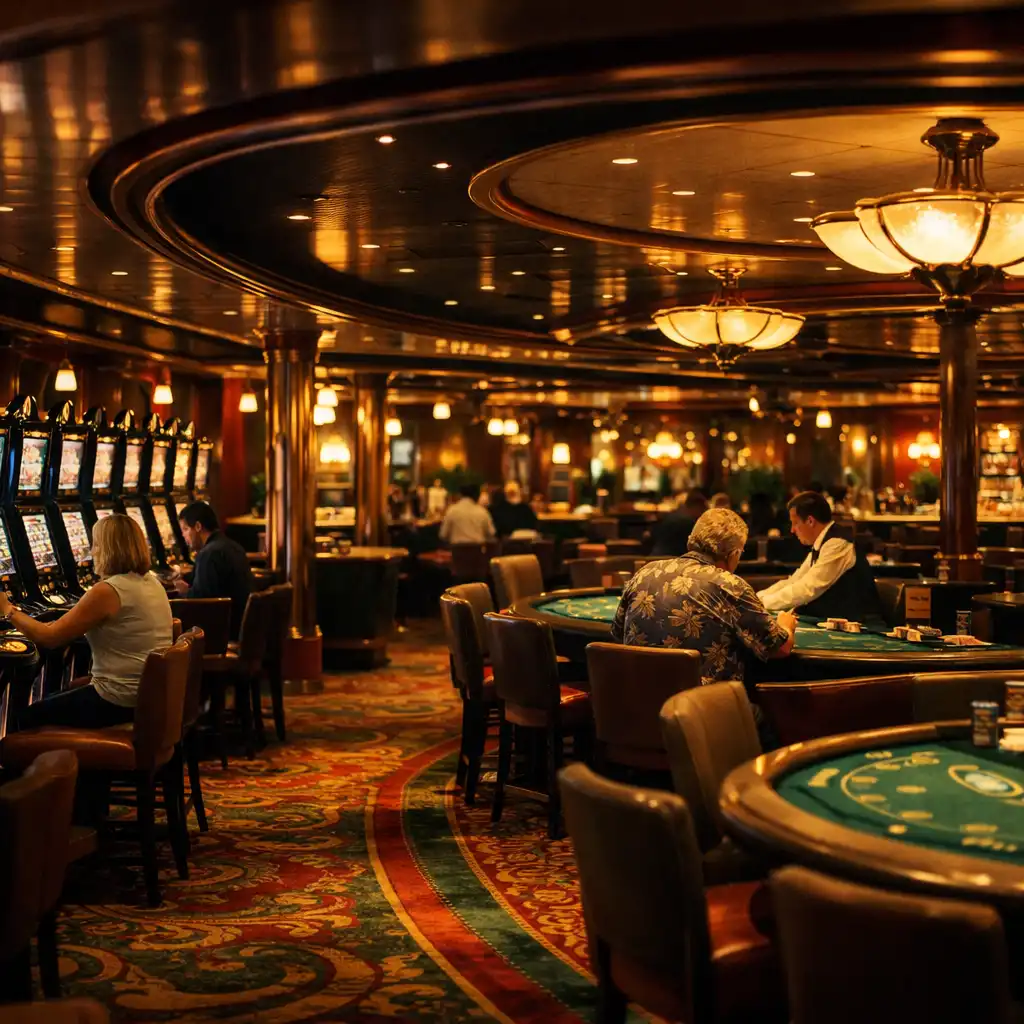
The casino is a self-contained world, often tucked away on a lower deck but impossible to miss once you step inside. The air is cool and slightly smoky, the lighting is low and golden, and the sound of chips and cards creates a constant, gentle rhythm. Rich carpets, brass fixtures, and deep red or green accents give the space a timeless, almost cinematic quality. There is a sense of stepping into a different time and place—a room that belongs less to the ship than to some older idea of glamour.
The Tables: Poker, Roulette, and Blackjack
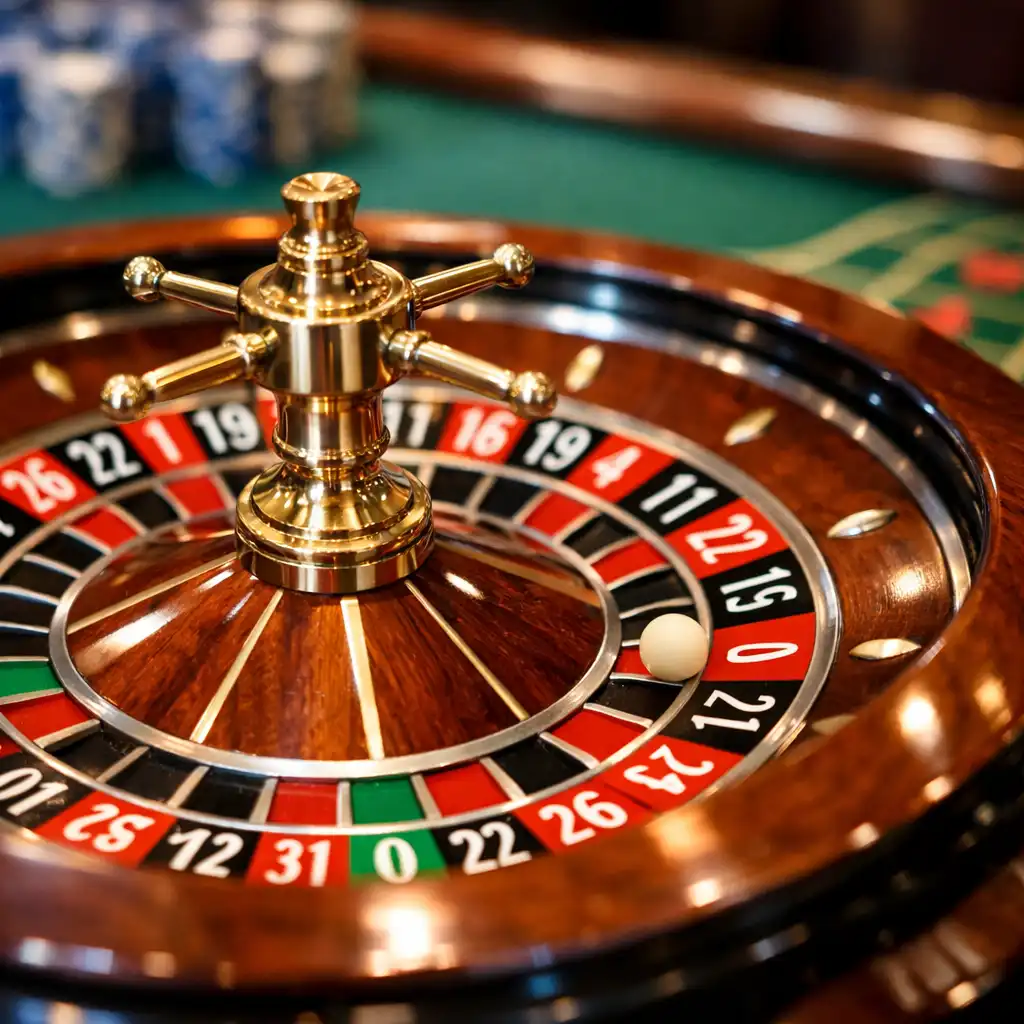
The casino's heart is its table games. Poker tables host quiet, intense games; roulette wheels spin with a hypnotic clatter; blackjack tables draw crowds of onlookers. Each table has its own micro-culture, from the serious players to the curious beginners. The physical tables themselves are part of the appeal—felt surfaces, neat stacks of chips, and the precise positions of the dealers. The staff move through the room with practiced calm, maintaining the atmosphere without intruding on it.
The Atmosphere: Glamour and Restraint
Despite its reputation, the shipboard casino is often a place of restraint. Passengers dress up, sip cocktails, and play for modest stakes. The focus is on the experience—the glamour of the setting, the thrill of the game—rather than the outcome. Non-gamblers come to watch or socialize, and the careful balance between excitement and comfort keeps the room feeling welcoming rather than intense. It is a space designed for the evening, not for the pursuit of fortune.
“The casino is the ship's most theatrical room—a stage where every player is both audience and performer.”
The Late-Night Lounges
Where the Night Lingers
The Dance Club: A Pulse of Energy
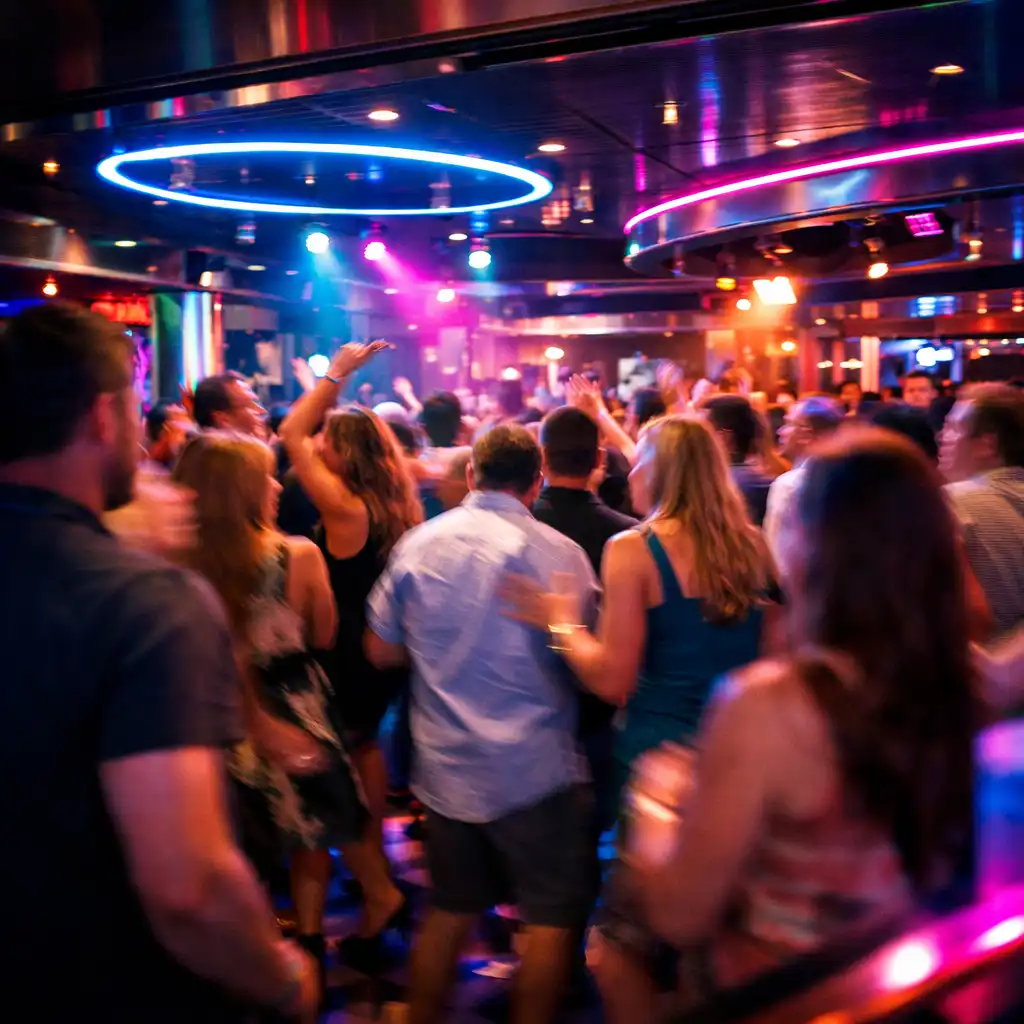
The dance club is the ship's beating heart after midnight. The music is loud, the lights are low, and the dance floor is a swirl of movement. Neon accents, mirrored walls, and a state-of-the-art sound system create an immersive, almost disorienting space. The crowd is a mix of ages, all united by the music, and there is a particular thrill in dancing on a moving ship—the floor subtly shifting beneath your feet as the vessel cuts through the dark sea.
The Quiet Lounge: A Final Nightcap
For those not ready for bed but seeking calm, the quiet lounge offers a refuge. Soft jazz plays, the lights are dim, and the conversation is hushed. Deep armchairs, low tables, and perhaps a fireplace or water feature create a sense of winding down as the night deepens. It is the perfect place for a final nightcap before the ship settles into silence—a gentle counterpoint to the dance club's energy just a few decks away.
“The quiet lounge is where the night goes to catch its breath before the ship surrenders to the sea.”
The Night Sky
Stargazing on the Open Deck
A Canopy of Stars
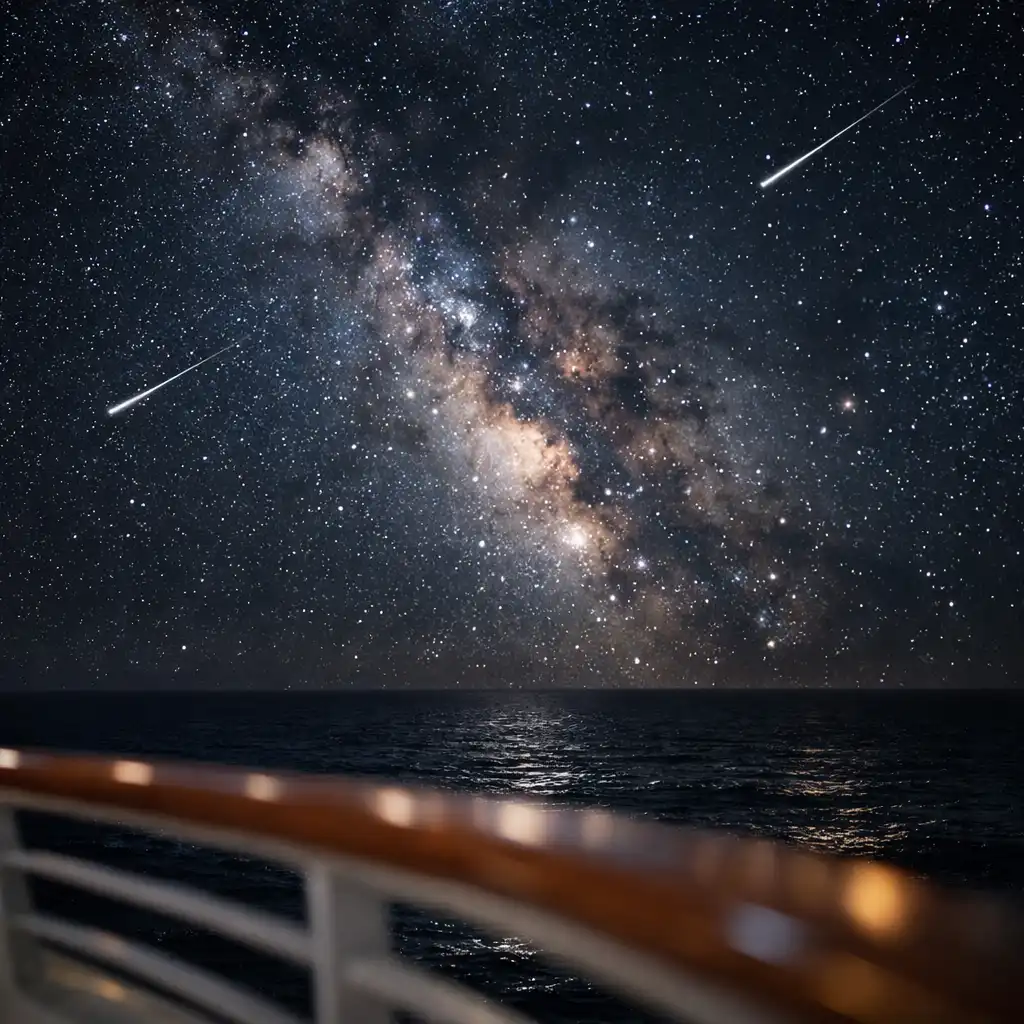
Far from city lights, the open ocean offers some of the darkest skies on Earth. On a clear night, the Milky Way stretches overhead, and shooting stars are a common sight. The ship's top deck becomes an impromptu observatory, with passengers pointing out constellations and sharing stories. Minimizing light pollution from the ship itself can deepen the darkness, and the best stargazing often happens in the hours after midnight, when the decks are quiet and the horizon is a clean line between sea and sky. There is a sense of wonder and connection to the universe that is difficult to find anywhere else.
The Morning After
Reflections on the Night
As the first light of dawn touches the horizon, the ship begins to stir. The night's revelers sleep in, the crew prepares for a new day, and the decks are hosed down and reset. The after-dark world fades, but its memory lingers—a reminder that a cruise ship is never truly asleep. The quiet of the early morning decks is its own kind of beauty, and there is a sense of continuity between night and day, an invitation to return to the evening's spaces in a new light.
For more stories from the ship's after-dark world, explore our features on dining, cabins, and the entertainment deck.
Explore the Entertainment Deck Read About Dining