The Steakhouse
Dark wood, leather booths, and the scent of grilled meat create a clubby, masculine atmosphere. The focus is on premium cuts and classic sides, often located on upper decks with ocean views.

Culinary Journey
From sunrise espresso on the promenade deck to midnight canapés in the lounge, a cruise ship is a culinary world in constant motion. Its dining venues are spread across multiple decks, each with its own rhythm, and meals are not just sustenance but social rituals that structure the day. The variety rivals a small city's restaurant scene, condensed into a moving vessel.
On a cruise ship, meals are anchors in the day—moments when the ship's community gathers, stories are exchanged, and the journey pauses for pleasure. Dining times structure the day, from early breakfast to late dinner, and the shared experience of meals creates a sense of camaraderie among passengers.
The ocean setting transforms ordinary meals into memorable events. Whether it is a quiet coffee as the ship pulls away from port or a formal dinner under chandeliers, each meal carries the rhythm of the sea. The ritual of dining becomes a way of marking time, of finding familiarity in a moving world, and of sharing the voyage with strangers who become table companions.
The Heart of the Ship
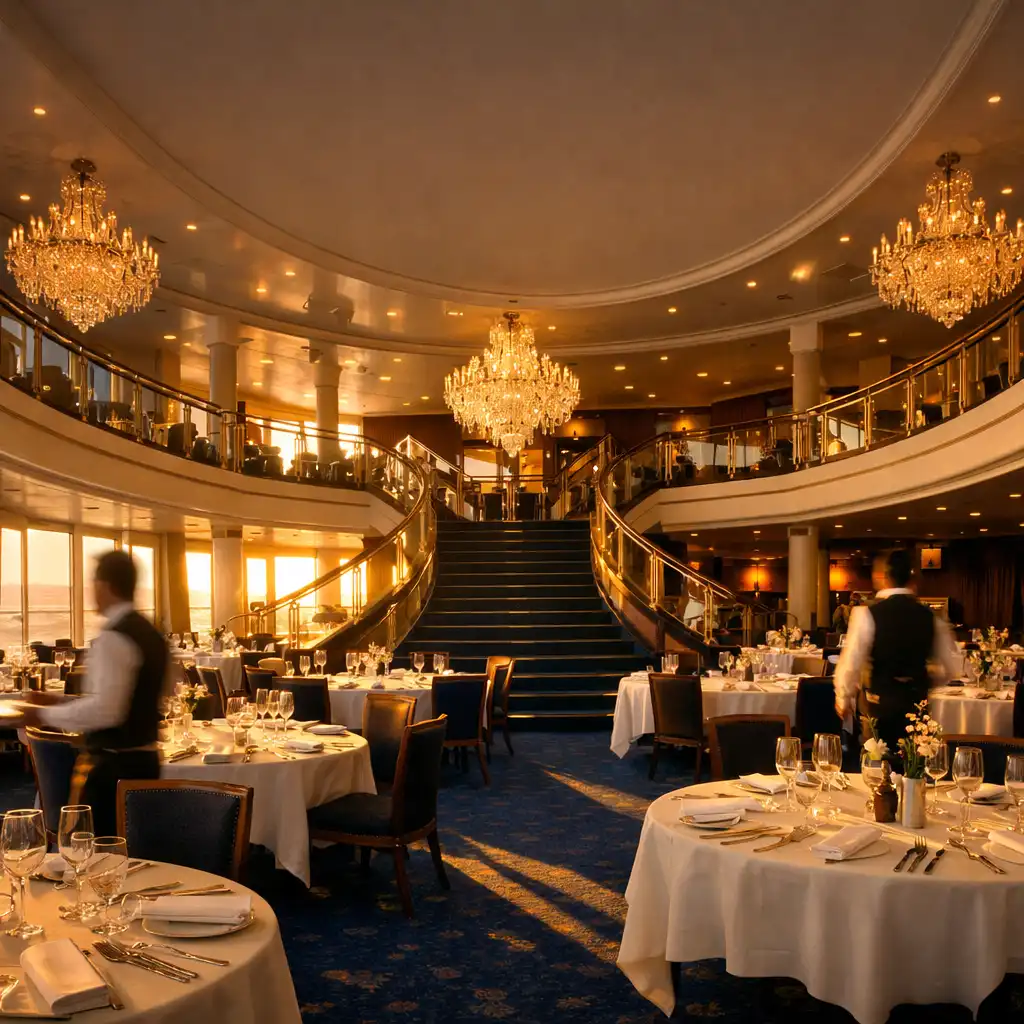
The main dining room is a cathedral of hospitality, with soaring ceilings, crisp linens, and a choreography of waiters that turns dinner into theatre. Multi-level spaces often feature sweeping staircases and chandeliers. Fixed or flexible seating times create different rhythms, and menus change daily, reflecting the ship's itinerary and seasons.
Waiters move with practiced grace, remembering preferences and pacing courses to match the evening's mood. Service is attentive but unobtrusive, and the meal becomes a social event, not just a transaction. Dress codes add a sense of occasion, encouraging passengers to pause and treat dinner as a highlight of the day.
Beyond the Main Room
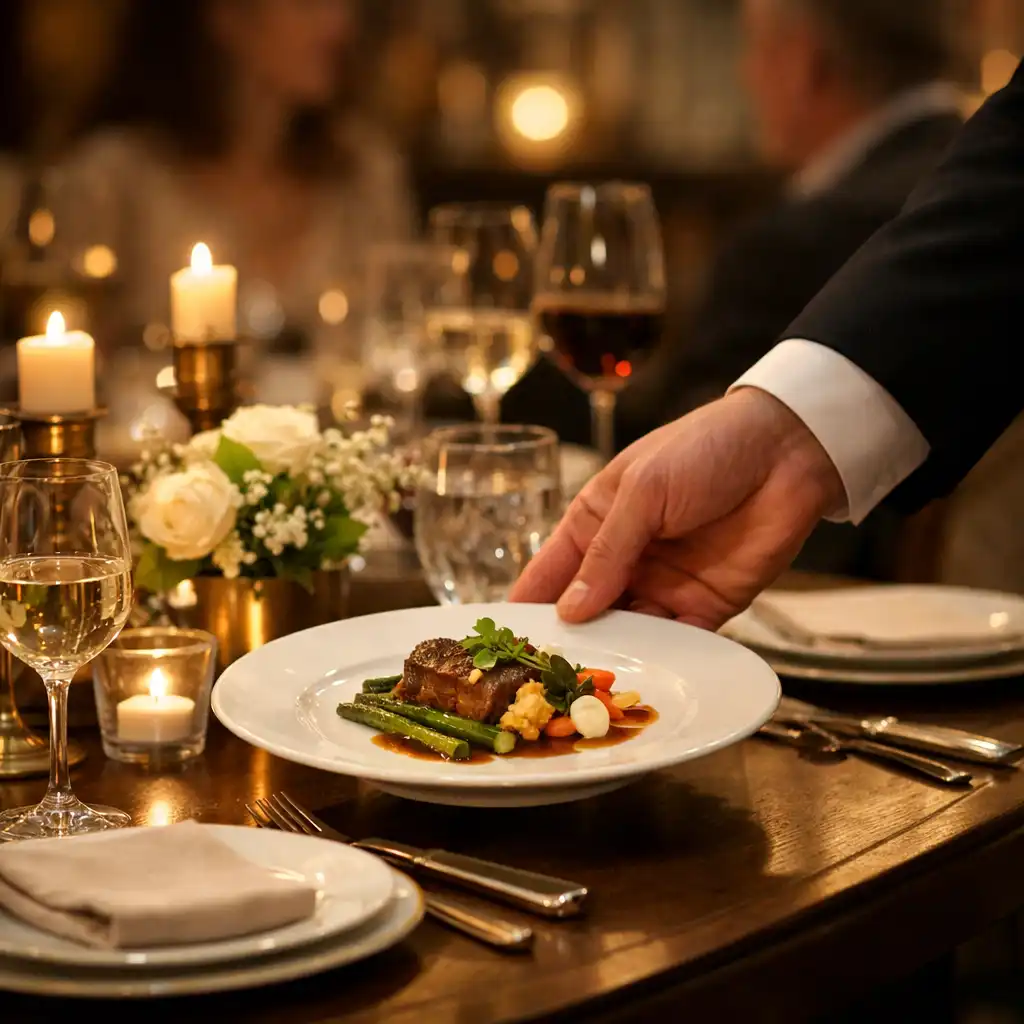
Specialty restaurants offer focused menus and intimate settings, often with a cover charge and reservation, providing a change of pace from the main dining room. Common themes include Italian, French, Asian, and steakhouse concepts. Smaller rooms allow for more personalized service, and these venues often have unique décor and atmosphere.
Dark wood, leather booths, and the scent of grilled meat create a clubby, masculine atmosphere. The focus is on premium cuts and classic sides, often located on upper decks with ocean views.
A sleek counter where chefs work with precision, offering a lighter, more contemporary dining experience. Fresh seafood and minimalist presentation are often paired with sake or Japanese whisky.
Rustic charm with checkered tablecloths and family-style platters, evoking a Mediterranean evening. Pasta, pizza, and regional wines create a lively, convivial atmosphere.
Abundance and Motion
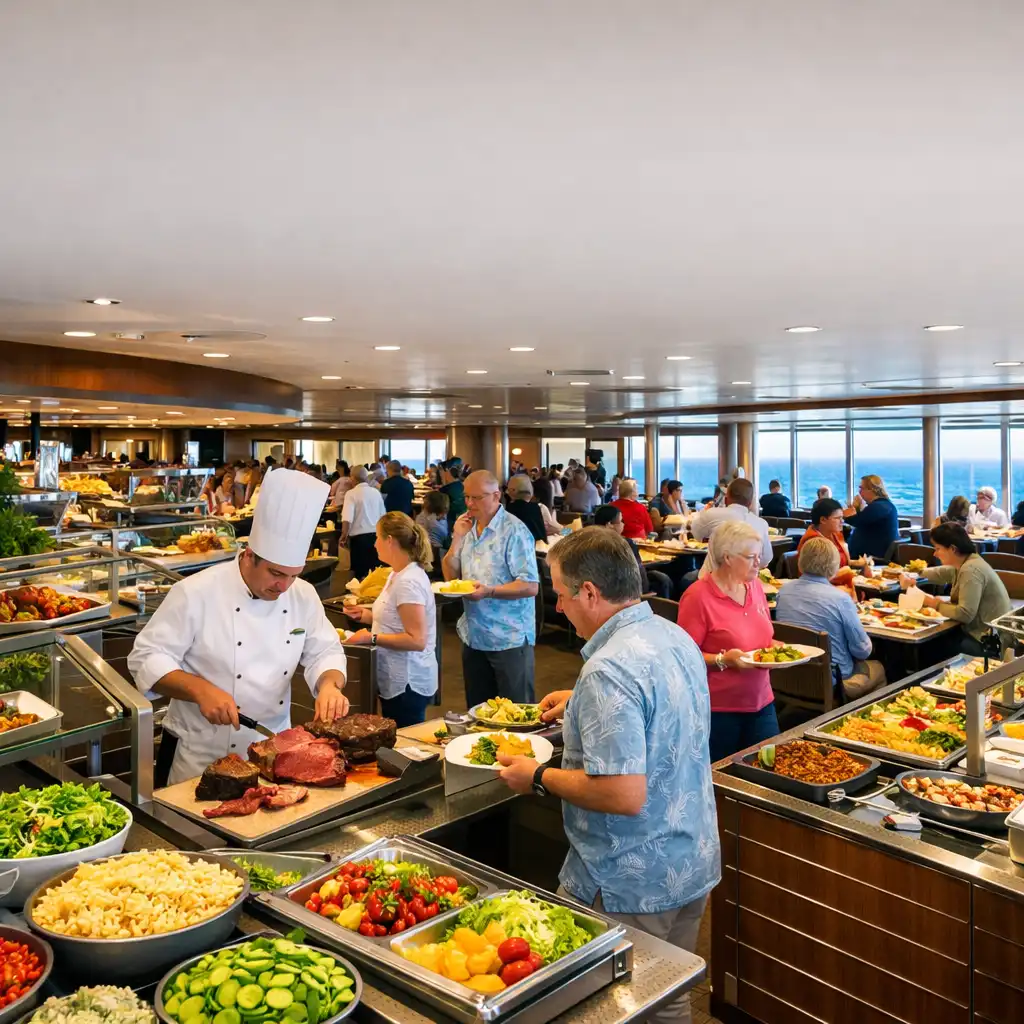
The buffet is a constantly changing landscape of stations, from omelette bars in the morning to carving stations at dinner, where the only limit is appetite. Multiple stations reduce lines and offer global cuisines. The casual atmosphere encourages grazing and socializing, and outdoor seating often provides ocean views.
It is a place of happy collisions—a passenger balancing a plate of tropical fruit beside someone choosing a slice of roast, families negotiating over desserts, and friends claiming a table by the window. The buffet never feels static; it shifts with the hour, the weather, and the collective mood of the ship.
Quick Bites
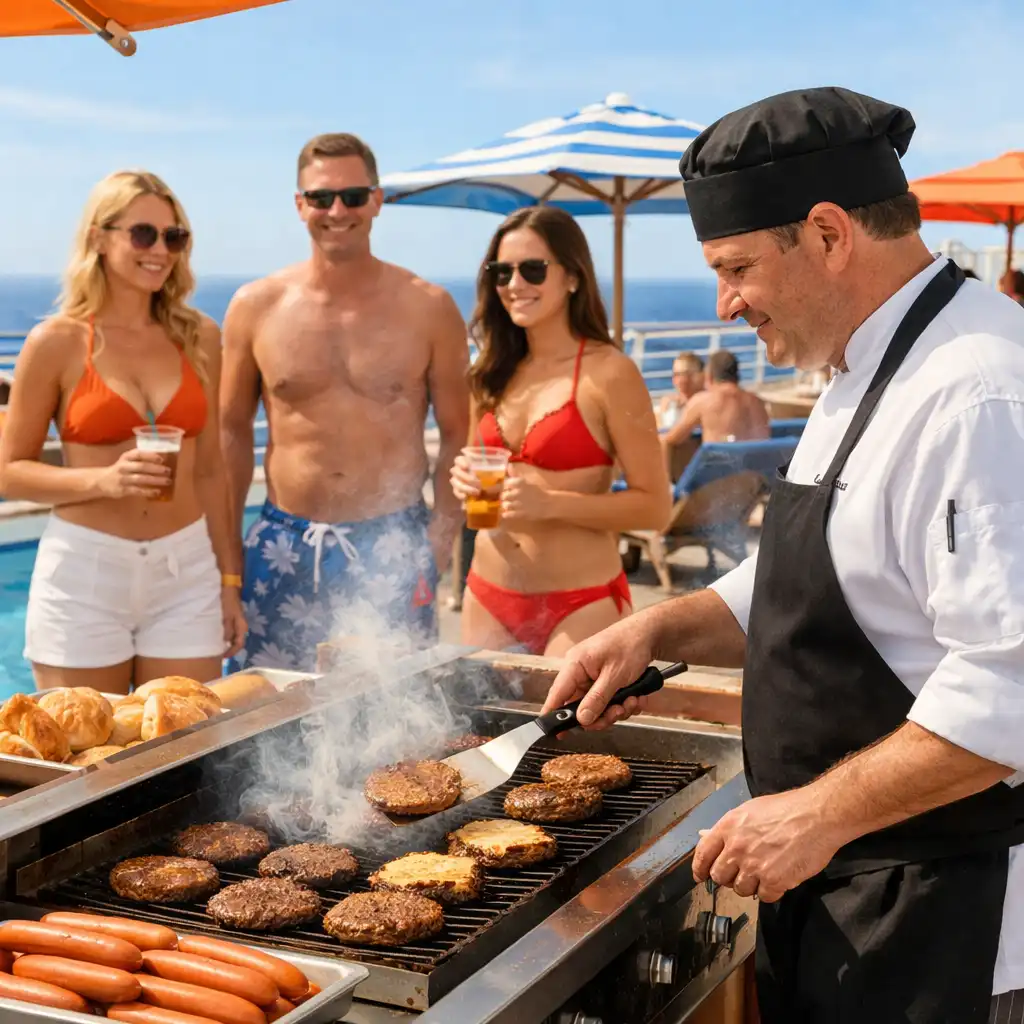
Casual eateries are the unsung heroes of shipboard dining, offering everything from poolside burgers to late-night pizza, often with no reservation needed. Poolside grills serve quick, satisfying fare, while pizzerias and delis offer grab-and-go options. Promenade cafés provide coffee and pastries throughout the day.
From Sunrise to Midnight
The ship's dining venues shift character with the hours, offering different menus, atmospheres, and crowds.
Quiet breakfasts and coffee on deck as the ship wakes, with soft light and the smell of fresh pastries.
Lively buffets and poolside grills, with passengers moving between sun and shade, plates piled high.
Formal dinners and specialty restaurants, with the ship's lights reflecting on dark water and a sense of occasion.
Pizza, room service, and quiet lounges, where the last conversations of the day drift into the hum of the engines.
Beyond the Plate
Some evenings, dining transforms into entertainment, with themed dinners, chef's tables, and interactive experiences that engage all the senses. Themed nights might feature regional cuisines or costume elements. Chef's tables offer a behind-the-scenes look at culinary craft, and these events often require reservations and add a sense of occasion.
“Dinner becomes a performance, where the kitchen is the stage and every course is a scene.
Passengers lean closer as chefs explain techniques, flames leap from a pan, and a dessert arrives under a glass dome filled with smoke. These are the meals that become stories—retold at breakfast, remembered long after the ship has docked.
The Last Course
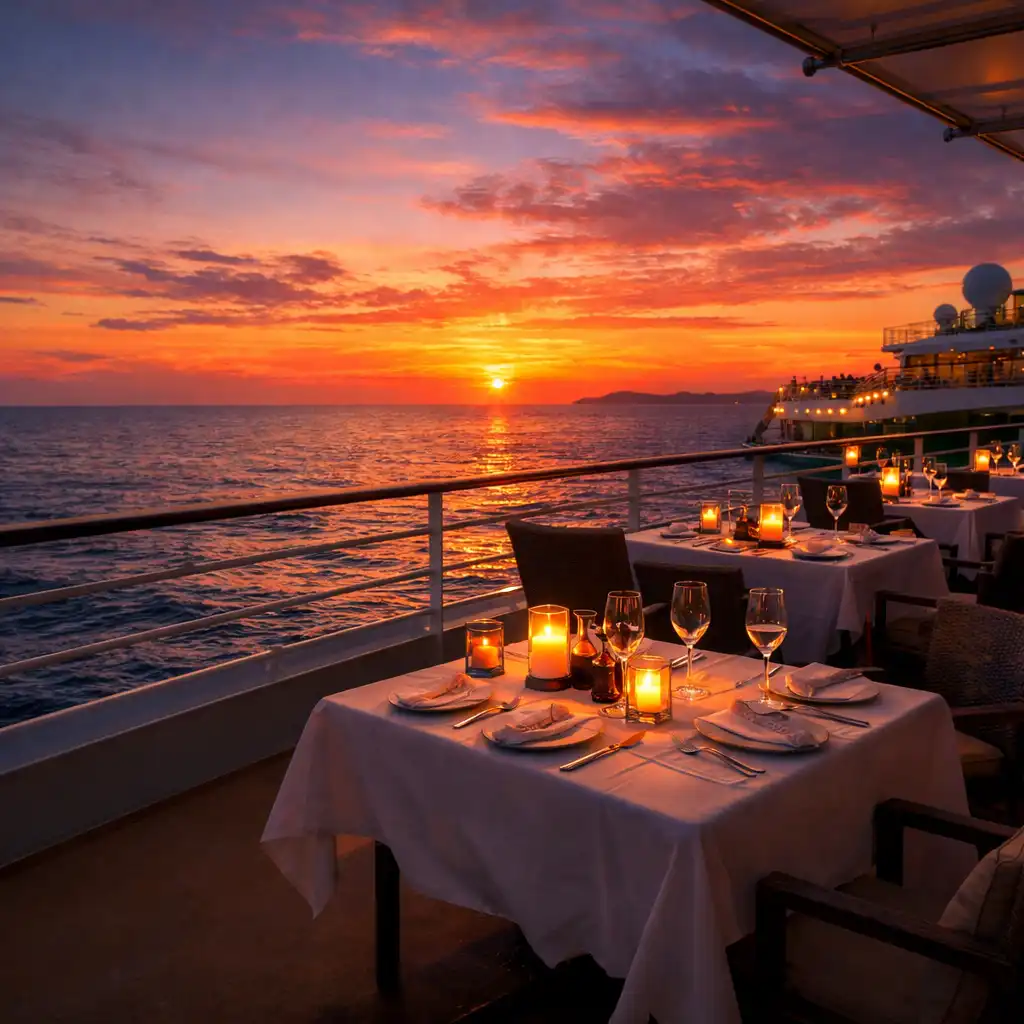
Dining on a cruise ship is not just about food; it's about the spaces, the rituals, and the ever-present sea, all combining to create memories that linger long after the last bite. Each venue offers a different facet of the ship's personality. The day's rhythm is punctuated by meals that bring people together, and the ocean setting elevates even the simplest meal.
“The sea is always at the table, turning every meal into a memory.