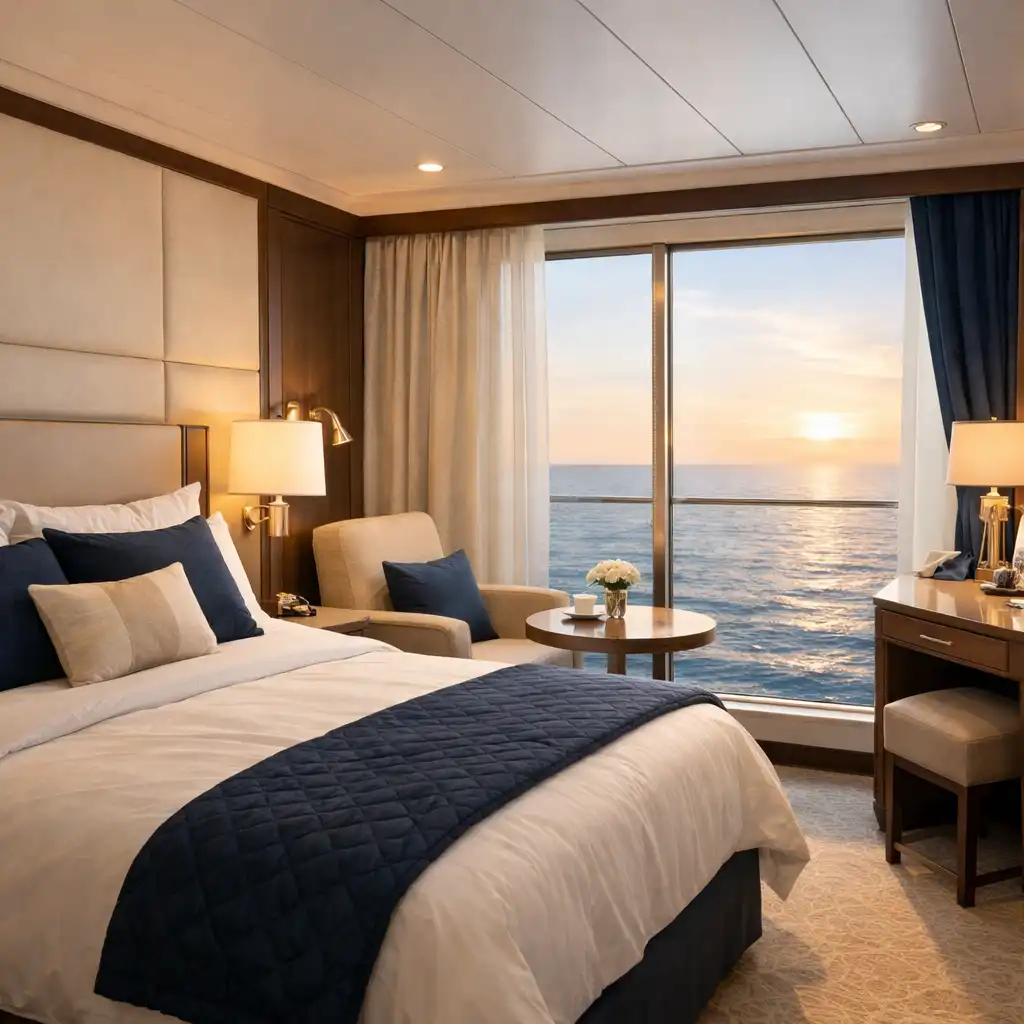
A stylish modern cruise cabin with a large window overlooking the ocean, warm cream and navy tones, plush bedding, and brass accents.

Cabin Feature

The Cabin as Private Horizon

A modern cruise cabin is more than a place to sleep—it is a compact world designed for rest, reflection, and the quiet thrill of being at sea. Cabins have evolved from utilitarian berths to thoughtfully designed living spaces. The interplay of light, materials, and ocean views defines the experience. This feature explores categories, amenities, and the design philosophy behind them.

From Berth to Boutique

The modern cruise cabin is the result of decades of design evolution, driven by passenger expectations and advances in shipbuilding. Early cabins were functional and compact, often with shared facilities. They were places to sleep, not spaces to inhabit.

Contemporary ships offer a range of categories, from interior studios to expansive suites. Each category reflects a different philosophy about how passengers want to live at sea. Some prioritise efficiency and value, while others emphasise openness, light, and private outdoor space.

Design now emphasises natural light, efficient storage, and a sense of calm. Materials are chosen to feel warm and residential rather than industrial. The result is a cabin that feels less like a shipboard necessity and more like a personal retreat.

Interior Cabins: The Art of the Windowless Retreat

The Windowless Sanctuary

Interior cabins are often the most affordable option, but clever design can make them feel surprisingly inviting. Without a window, lighting becomes crucial—warm, layered illumination mimics natural light. Mirrors and light-colored surfaces create a sense of space. Virtual balconies or digital portholes are increasingly common on newer ships, offering a simulated view of the sea.

Design Strategies

  • Beds often convert to sofas during the day, freeing floor space.
  • Storage is integrated into walls and under beds to reduce clutter.
  • Accent walls or artwork add personality without overwhelming the space.

Who Should Choose an Interior Cabin?

Interior cabins suit travellers who plan to spend most of their time in public areas and value savings over views. They are ideal for short itineraries or port-intensive cruises. The lack of natural light can actually improve sleep quality, and they offer a quiet, dark retreat after a busy day.

“A windowless room can still feel like a sanctuary when the light is warm and the walls hold the day’s quiet.”

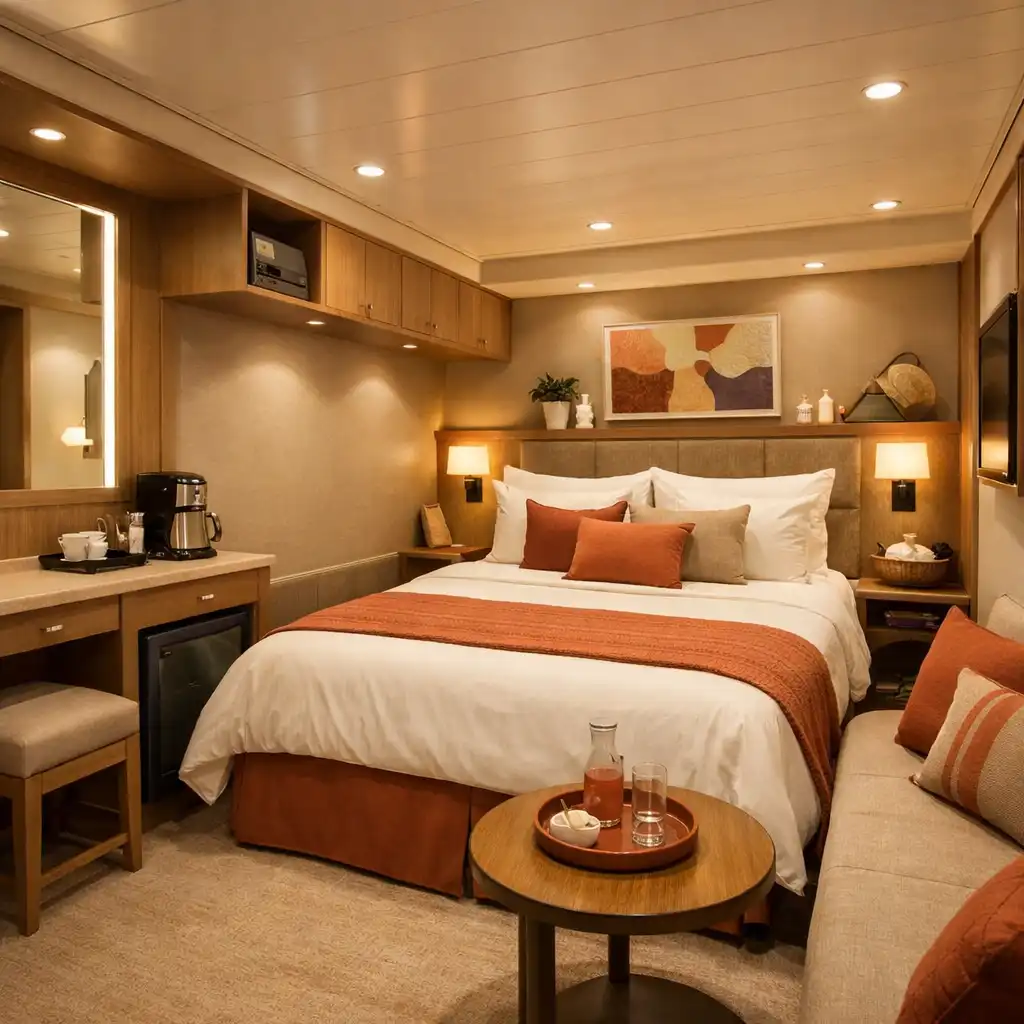
A well-designed interior cruise cabin without windows, warm ambient lighting, neutral palette with terracotta accents, and clever storage.
Interior cabin design relies on layered light and soft neutrals.

Oceanview Cabins: Framing the Sea

A Window to the World

Oceanview cabins offer a fixed window or porthole, providing natural light and a connection to the sea without the cost of a balcony. Windows vary in size from small portholes to large picture windows. The view can be obstructed by lifeboats or ship structures on some decks. Natural light transforms the cabin's mood throughout the day, shifting from bright morning clarity to soft evening glow.

Design Considerations

Oceanview cabins often feature window seats or ledges, and designers use the window as a focal point. Furniture is arranged to face the window, inviting passengers to linger over the view. Curtains or blinds allow for light control, and the window frame is often finished in brass or wood tones.

  • Window seats create a reading nook with a sea view.
  • Brass or wood frames add a nautical elegance.
  • Light control is essential for daytime naps and late sleepers.
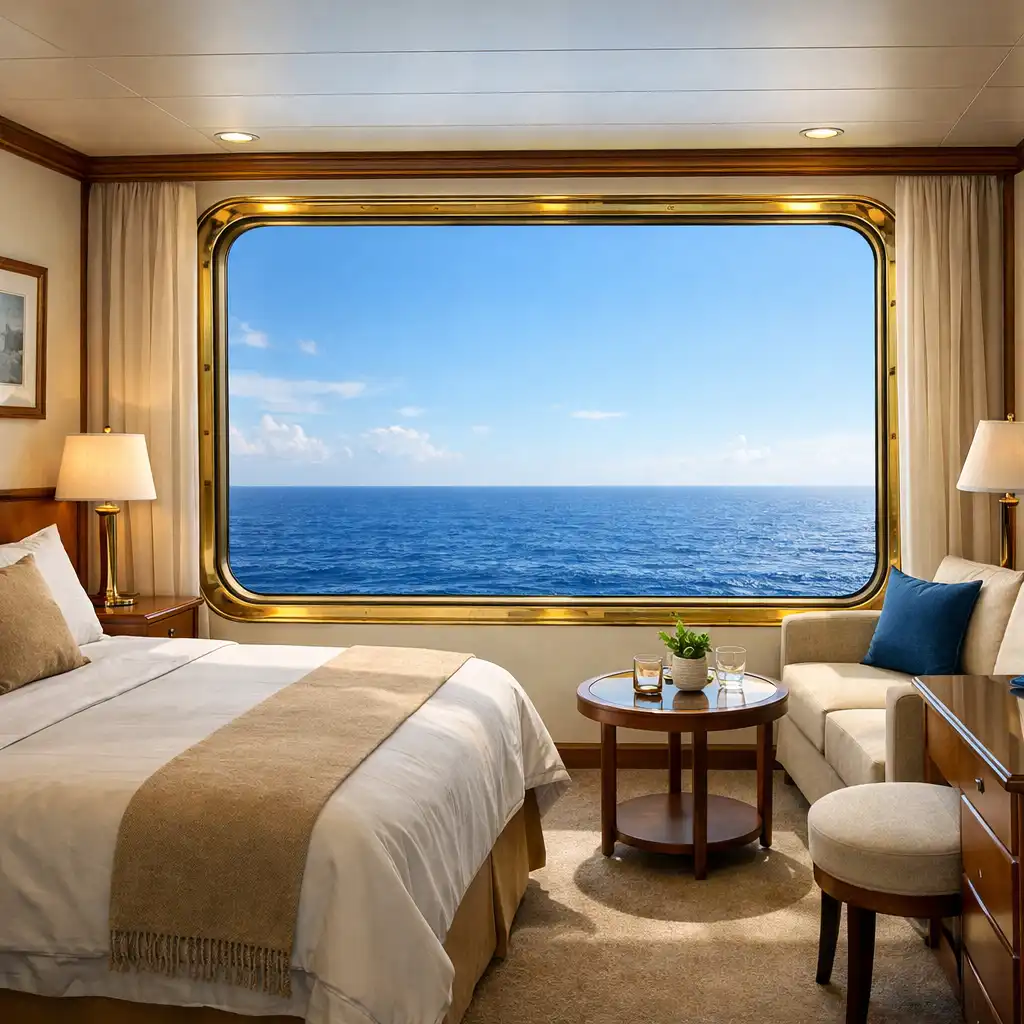
An oceanview cruise cabin with a large picture window framing a blue sea and sky, natural light filling the room, and a brass window frame.
The oceanview window becomes the cabin's living artwork.

Balcony Cabins: The Private Veranda

The Allure of Open Air

Balcony cabins offer a private outdoor space, allowing passengers to enjoy the sea breeze and views without leaving their room. Balconies range from small standing spaces to large furnished verandas. They are ideal for morning coffee, sunset watching, or quiet reading. The connection to the ocean is more immediate than in other cabin types.

“A balcony turns a room into a personal observation deck, where the horizon belongs to you alone.”

Design and Layout

  • Floor-to-ceiling glass doors blur the line between indoors and out.
  • Furniture includes a small table and chairs or loungers.
  • Privacy partitions separate neighbouring balconies.
  • Some ships offer 'infinite balcony' designs where the window lowers to create an open-air feel.

The Experience

A balcony transforms the cabin from a place to sleep into a personal observation deck. Watching the ship dock or depart from your balcony is a memorable experience. The sound of the sea provides a soothing backdrop. Balcony cabins are often worth the premium for scenic itineraries.

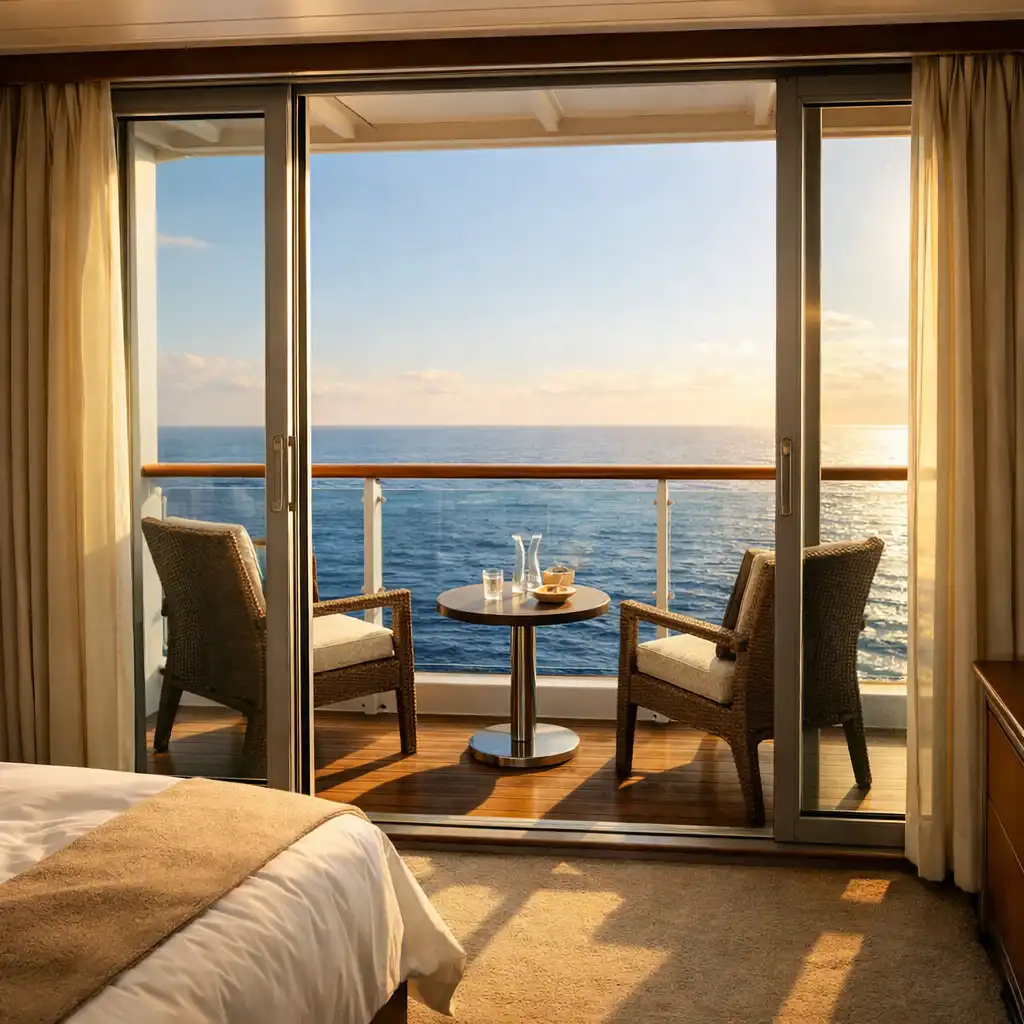
A balcony cruise cabin with floor-to-ceiling glass doors open to a private veranda, two chairs and a small table, and an ocean horizon in the distance.
The veranda extends the cabin into the open air.

Suites: The Pinnacle of Cabin Design

Space and Separation

Suites are the largest and most luxurious cabin category, often featuring separate living and sleeping areas. Suites can range from junior suites to multi-room penthouses. They may include dining areas, walk-in closets, and multiple bathrooms. The extra space allows for more personalised design and comfort.

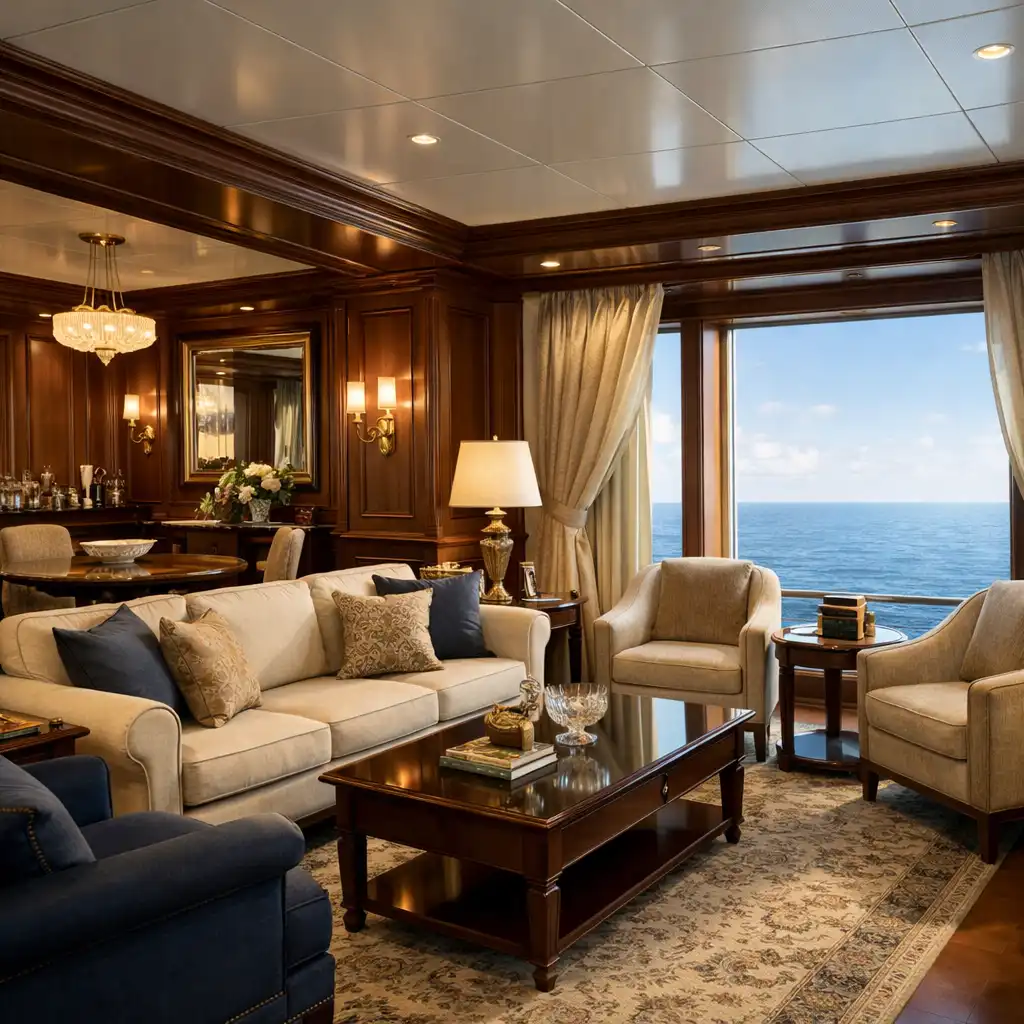
A luxurious cruise suite living area with separate seating, rich wood panelling, brass accents, and large windows with an ocean view.
A suite living area designed for residential comfort at sea.

Enhanced Amenities

  • Butler service, priority embarkation, and access to private lounges.
  • Some suites feature hot tubs on the balcony or in the bathroom.
  • Premium bedding, upgraded toiletries, and complimentary minibars are common.

Design Philosophy

Suite design emphasises residential comfort, with rich materials, curated artwork, and attention to detail. Designers use a palette of warm neutrals, deep blues, and brass accents. Furniture is often custom-made for the space. Lighting is layered to create different moods throughout the day.

“A suite is not just a larger room; it is a different way of living at sea.”

The Design Details That Matter

Lighting

Layered lighting is essential in a cabin, allowing passengers to adjust the mood from bright and functional to soft and relaxing. Reading lights by the bed, ambient cove lighting, and dimmable overhead fixtures. Warm colour temperatures create a cozy atmosphere. Some cabins feature 'do not disturb' and 'make up room' indicators integrated into lighting controls.

Storage

Clever storage solutions are crucial in compact cabins, with every inch used efficiently. Under-bed storage for suitcases, overhead bins, and closet organisers. Magnetic walls allow passengers to hang items. Multi-functional furniture, such as ottomans with hidden compartments.

Materials and Textures

The choice of materials—wood veneers, soft fabrics, brushed metals—contributes to the cabin's overall feel. Warm wood tones evoke a classic nautical aesthetic. Soft-touch surfaces and plush textiles add comfort. Brass or copper accents provide a touch of elegance.

Technology

Modern cabins integrate technology seamlessly, from USB ports to smart controls. Multiple charging points, including USB and wireless charging. Smart TVs with on-demand content and ship information. Climate control and lighting adjustable from a bedside panel or app.

The Cabin at Night

A Quiet Haven

At night, the cabin transforms into a peaceful retreat, with the ship's gentle motion and soft lighting creating a cocoon-like feel. Dimmed lights and drawn curtains signal the transition to rest. The sound of the sea against the hull is a constant, soothing presence. For balcony cabins, stepping outside reveals a sky full of stars.

“After dark, the cabin becomes a quiet haven—a small, steady world within the larger voyage.”

Sensory Details

  • High-quality bedding and blackout curtains enhance sleep.
  • The gentle rocking can be deeply relaxing.
  • A nightlight in the bathroom provides just enough illumination.

Choosing Your Cabin: An Editorial Guide

Consider Your Travel Style

The best cabin depends on how you plan to spend your time on board and what you value most. If you'll be out exploring all day, an interior cabin may suffice. If you love private outdoor time, a balcony is worth the splurge. For special occasions or longer cruises, a suite offers extra comfort.

Cabin category comparison
Category Key Features Best For
Interior No natural light, clever lighting, compact Budget-focused travellers, port-intensive itineraries
Oceanview Fixed window, natural light, no balcony Travellers who want a view without a balcony
Balcony Private outdoor space, floor-to-ceiling doors Scenic cruises, private relaxation
Suite Separate living areas, premium amenities Special occasions, longer voyages

Final Thought

Ultimately, the cabin is your personal retreat at sea—choose the one that makes you feel most at home. Consider the itinerary: scenic cruises may warrant a balcony. Think about your budget and priorities. Remember that even the smallest cabin can be a cozy haven.

“The right cabin is not the largest one; it is the one that feels like yours.”

A Space to Remember

Long after the cruise ends, the cabin remains a vivid memory—a small room that held the promise of adventure and the comfort of home. The first glimpse of your cabin sets the tone for the voyage. It becomes a familiar anchor amid the ship's constant motion. The details—the view, the light, the feel of the sheets—linger in the mind.

“The cabin is where the voyage begins and where it quietly returns each night.”